


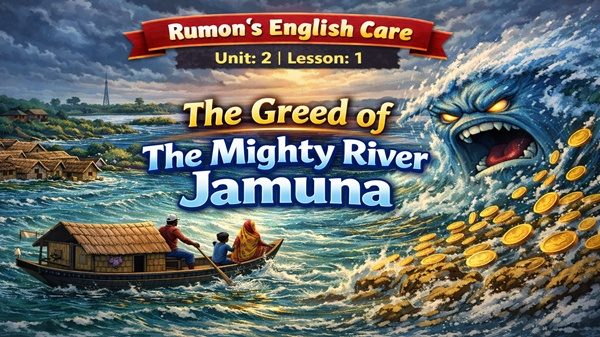
Meherjan lives in a slum on the Sirajgonj Town Protection Embankment. The whispering wind from the river Jamuna makes the fire unsteady. The dancing flames remind Meherjan of the turmoil in her life. Not long ago Meherjan had everything a family, arable land and cattle. The erosion of the Jamuna gradually consumed all her land property. It finally claimed her only shelter during the last monsoon. It took the river only a day to devour Meher’s house, trees, vegetable garden and the bamboo bush. She had a happy family once. Over the years, she lost her husband and her family to diseases that cruel hunger and poverty brought to the family. Now, she is the only one left to live on with the loss and pain. The greedy Jamuna has shattered her dreams and happiness. There are thousand others waiting to share the same fate like Meherjan. Bangladesh is a land of rivers. Some of whose banks overflow or erode during monsoon. Erosion is a harsh reality for the people living along the river banks. During each monsoon many more villages are threatened by the mighty rivers like the Jamuna, the Padma and the Meghna. It is estimated that river erosion makes at least 100,000 people homeless every year in Bangladesh. In fact, river erosion is one of the main dangers caused by climate change. If we can’t take prompt actions to adapt to climate change, there will be thousands of more Meherjans in our towns and villages every year.
নিচে অনুচ্ছেদটির বাংলা অর্থ দেওয়া হলো—
মেহেরজান সিরাজগঞ্জ শহর রক্ষা বাঁধের ওপর একটি বস্তিতে বাস করে। যমুনা নদী থেকে আসা ফিসফিসে হাওয়া আগুনটিকে অস্থির করে তোলে। দুলতে থাকা আগুনের শিখা তার জীবনের অশান্তির কথা মেহেরজানকে মনে করিয়ে দেয়। খুব বেশি দিন আগেও মেহেরজানের সবকিছুই ছিল—একটি পরিবার, চাষযোগ্য জমি ও গবাদিপশু। যমুনা নদীর ভাঙন ধীরে ধীরে তার সমস্ত জমিজমা গ্রাস করে নেয়। শেষ পর্যন্ত গত বর্ষায় নদীটি তার একমাত্র আশ্রয়টুকুও কেড়ে নেয়। মাত্র একদিনেই নদীটি গিলে ফেলে মেহেরজানের ঘরবাড়ি, গাছপালা, সবজি বাগান এবং বাঁশঝাড়। একসময় তার সুখী পরিবার ছিল। বছরের পর বছর ধরে নির্মম ক্ষুধা ও দারিদ্র্য যে রোগব্যাধি নিয়ে এসেছিল, তাতে সে তার স্বামী ও পরিবারের সদস্যদের হারিয়েছে। এখন ক্ষতি আর যন্ত্রণাকে বুকে নিয়ে বেঁচে থাকার জন্য সে একাই রয়ে গেছে। লোভী যমুনা তার স্বপ্ন ও সুখ চূর্ণ করে দিয়েছে। মেহেরজানের মতো একই পরিণতির অপেক্ষায় রয়েছে আরও হাজারো মানুষ।
বাংলাদেশ নদীমাতৃক দেশ। যার কিছু নদীর তীর বর্ষাকালে উপচে পড়ে বা ভেঙে যায়। নদীভাঙন নদীতীরবর্তী মানুষের জন্য এক নির্মম বাস্তবতা। প্রতি বর্ষায় যমুনা, পদ্মা ও মেঘনার মতো প্রভাবশালী নদীগুলোর কারণে আরও অনেক গ্রাম হুমকির মুখে পড়ে। ধারণা করা হয়, বাংলাদেশে প্রতি বছর নদীভাঙনের ফলে অন্তত এক লাখ মানুষ গৃহহীন হয়। প্রকৃতপক্ষে, জলবায়ু পরিবর্তনের ফলে সৃষ্ট প্রধান বিপদগুলোর একটি হলো নদীভাঙন। যদি আমরা জলবায়ু পরিবর্তনের সঙ্গে খাপ খাওয়ানোর জন্য দ্রুত ব্যবস্থা নিতে না পারি, তবে প্রতি বছর আমাদের শহর ও গ্রামে আরও হাজার হাজার মেহেরজানের জন্ম হবে।
50 Pieces Vocabulary
| No. | Word | Bengali Meaning (বাংলা অর্থ) | Synonym | Antonym | Parts of Speech |
|---|---|---|---|---|---|
| 1 | Slum | বস্তি | shanty | suburb | Noun |
| 2 | Embankment | বাঁধ | dam | hollow | Noun |
| 3 | Whispering | ফিসফিসে | murmuring | loud | Adjective |
| 4 | Unsteady | অস্থির | unstable | steady | Adjective |
| 5 | Dancing | দুলতে থাকা | flickering | still | Adjective |
| 6 | Flames | আগুনের শিখা | fire | ash | Noun |
| 7 | Remind | স্মরণ করানো | recall | forget | Verb |
| 8 | Turmoil | অশান্তি | chaos | peace | Noun |
| 9 | Arable | চাষযোগ্য | fertile | barren | Adjective |
| 10 | Gradually | ধীরে ধীরে | slowly | suddenly | Adverb |
| 11 | Consumed | গ্রাস করেছে | devoured | saved | Verb |
| 12 | Property | সম্পত্তি | possession | poverty | Noun |
| 13 | Claimed | কেড়ে নিয়েছে | seized | returned | Verb |
| 14 | Shelter | আশ্রয় | refuge | exposure | Noun |
| 15 | Monsoon | বর্ষাকাল | rainy season | drought | Noun |
| 16 | Devour | গিলে ফেলা | swallow | spare | Verb |
| 17 | Vegetable | শাকসবজি | greens | meat | Noun |
| 18 | Bamboo bush | বাঁশঝাড় | grove | desert | Noun |
| 19 | Lost | হারিয়েছে | missed | found | Verb |
| 20 | Diseases | রোগব্যাধি | illness | health | Noun |
| 21 | Cruel | নিষ্ঠুর | harsh | kind | Adjective |
| 22 | Hunger | ক্ষুধা | starvation | fullness | Noun |
| 23 | Poverty | দারিদ্র্য | misery | wealth | Noun |
| 24 | Pain | যন্ত্রণা | suffering | comfort | Noun |
| 25 | Greedy | লোভী | selfish | generous | Adjective |
| 26 | Shattered | চূর্ণ করেছে | destroyed | repaired | Verb |
| 27 | Dreams | স্বপ্ন | hopes | despair | Noun |
| 28 | Fate | পরিণতি | destiny | choice | Noun |
| 29 | Rivers | নদীগুলো | streams | deserts | Noun |
| 30 | Overflow | উপচে পড়া | flood | drain | Verb |
| 31 | Erode | ভেঙে যাওয়া | wear away | build | Verb |
| 32 | Harsh | কঠোর | severe | mild | Adjective |
| 33 | Reality | বাস্তবতা | truth | illusion | Noun |
| 34 | Threatened | হুমকির মুখে | endangered | protected | Verb |
| 35 | Mighty | শক্তিশালী | powerful | weak | Adjective |
| 36 | Estimated | ধারণা করা হয় | assumed | proven | Verb |
| 37 | Homeless | গৃহহীন | shelterless | housed | Adjective |
| 38 | Dangers | বিপদ | risks | safety | Noun |
| 39 | Climate | জলবায়ু | weather | — | Noun |
| 40 | Change | পরিবর্তন | alteration | stability | Noun |
| 41 | Prompt | দ্রুত | immediate | delayed | Adjective |
| 42 | Actions | পদক্ষেপ | steps | neglect | Noun |
| 43 | Adapt | খাপ খাওয়ানো | adjust | resist | Verb |
| 44 | Waiting | অপেক্ষমাণ | expecting | leaving | Verb |
| 45 | Share | ভাগ করা | divide | keep | Verb |
| 46 | Threat | হুমকি | danger | assurance | Noun |
| 47 | Monsoon floods | বর্ষার বন্যা | deluge | drought | Noun |
| 48 | Landless | ভূমিহীন | dispossessed | landed | Adjective |
| 49 | Survival | বেঁচে থাকা | existence | death | Noun |
| 50 | Victim | শিকার | sufferer | victor | Noun |
50 Pieces MCQ
Based on the Text (1–20)
-
Where does Meherjan live?
a) In a village
b) On the Sirajganj Town Protection Embankment
c) Beside the Padma River
d) In a city house -
Which river caused erosion in Meherjan’s life?
a) Padma
b) Meghna
c) Jamuna
d) Karnafuli -
What makes the fire unsteady?
a) Heavy rain
b) Whispering wind
c) Cold weather
d) Darkness -
The dancing flames remind Meherjan of her—
a) happiness
b) childhood
c) turmoil in life
d) success -
What did Meherjan have before erosion?
a) Only cattle
b) A family and land
c) A job
d) A boat -
What consumed Meherjan’s land?
a) Flood
b) Storm
c) River erosion
d) Earthquake -
When was her shelter destroyed?
a) During winter
b) During summer
c) During last monsoon
d) During spring -
How long did the river take to devour her house?
a) One week
b) One month
c) One day
d) One year -
What did Meherjan lose over the years?
a) Friends
b) Wealth
c) Husband and family
d) Job -
What caused diseases in her family?
a) Cold weather
b) Hunger and poverty
c) Flood water
d) Old age -
Who is left alive now?
a) Meherjan and her son
b) Meherjan only
c) Her husband
d) Her parents -
How is the Jamuna described in the text?
a) Calm
b) Peaceful
c) Greedy
d) Gentle -
Bangladesh is called—
a) A land of forests
b) A land of hills
c) A land of rivers
d) A land of deserts -
Which season causes most erosion?
a) Winter
b) Summer
c) Monsoon
d) Autumn -
Which rivers are mentioned in the text?
a) Jamuna only
b) Jamuna and Padma
c) Jamuna, Padma and Meghna
d) Padma and Meghna -
How many people become homeless every year due to erosion?
a) 10,000
b) 50,000
c) 100,000
d) 1,000,000 -
River erosion is related to—
a) Industrialization
b) Climate change
c) Urbanization
d) Population growth -
What will happen if prompt action is not taken?
a) Less erosion
b) More rivers
c) More Meherjans
d) Less poverty -
The word “harsh” means—
a) Gentle
b) Cruel
c) Soft
d) Kind -
The passage mainly highlights—
a) City life
b) River beauty
c) River erosion and suffering
d) Tourism
Synonyms (21–30)
-
Synonym of turmoil is—
a) Peace
b) Calm
c) Chaos
d) Silence -
Synonym of devour is—
a) Protect
b) Swallow
c) Save
d) Repair -
Synonym of harsh is—
a) Mild
b) Gentle
c) Severe
d) Soft -
Synonym of poverty is—
a) Wealth
b) Richness
c) Misery
d) Comfort -
Synonym of mighty is—
a) Weak
b) Small
c) Powerful
d) Thin -
Synonym of shelter is—
a) Exposure
b) Refuge
c) Danger
d) Risk -
Synonym of greedy is—
a) Generous
b) Selfish
c) Kind
d) Honest -
Synonym of estimated is—
a) Proved
b) Measured
c) Assumed
d) Shown -
Synonym of threatened is—
a) Protected
b) Endangered
c) Saved
d) Helped -
Synonym of adapt is—
a) Resist
b) Adjust
c) Destroy
d) Ignore
Antonyms (31–40)
-
Antonym of cruel is—
a) Harsh
b) Kind
c) Rough
d) Severe -
Antonym of poverty is—
a) Hunger
b) Misery
c) Wealth
d) Pain -
Antonym of homeless is—
a) Shelterless
b) Poor
c) Housed
d) Landless -
Antonym of unsteady is—
a) Weak
b) Stable
c) Shaky
d) Loose -
Antonym of greedy is—
a) Selfish
b) Generous
c) Cruel
d) Proud -
Antonym of harsh is—
a) Rough
b) Severe
c) Mild
d) Strong -
Antonym of loss is—
a) Pain
b) Damage
c) Gain
d) Sorrow -
Antonym of danger is—
a) Risk
b) Threat
c) Safety
d) Fear -
Antonym of destroy is—
a) Break
b) Harm
c) Build
d) Damage -
Antonym of hungry is—
a) Starving
b) Weak
c) Full
d) Poor
Parts of Speech (41–50)
-
The word “whispering” is a—
a) Noun
b) Verb
c) Adjective
d) Adverb -
The word “erosion” is a—
a) Verb
b) Noun
c) Adjective
d) Adverb -
The word “gradually” is a—
a) Noun
b) Verb
c) Adjective
d) Adverb -
The word “greedy” is a—
a) Noun
b) Verb
c) Adjective
d) Adverb -
The word “devour” is a—
a) Noun
b) Verb
c) Adjective
d) Preposition -
The word “poverty” is a—
a) Verb
b) Adjective
c) Noun
d) Adverb -
The word “mighty” is a—
a) Noun
b) Pronoun
c) Adjective
d) Verb -
The word “adapt” is a—
a) Noun
b) Verb
c) Adjective
d) Adverb -
The word “homeless” is a—
a) Noun
b) Verb
c) Adjective
d) Conjunction -
The word “pain” is a—
a) Verb
b) Adjective
c) Noun
d) Adverb
Answer Key (1–50):
-
b, 2. c, 3. b, 4. c, 5. b, 6. c, 7. c, 8. c, 9. c, 10. b,
-
b, 12. c, 13. c, 14. c, 15. c, 16. c, 17. b, 18. c, 19. b, 20. c,
-
c, 22. b, 23. c, 24. c, 25. c, 26. b, 27. b, 28. c, 29. b, 30. b,
-
b, 32. c, 33. c, 34. b, 35. b, 36. c, 37. c, 38. c, 39. c, 40. c,
-
c, 42. b, 43. d, 44. c, 45. b, 46. c, 47. c, 48. b, 49. c, 50. c
Answer the following questions.
1. Where does Meherjan live?
Answer:
Meherjan lives in a slum on the Sirajganj Town Protection Embankment beside the river Jamuna.
2. What reminds Meherjan of the turmoil in her life?
Answer:
The dancing flames of the unsteady fire remind Meherjan of the turmoil and suffering in her life.
3. What did Meherjan have before river erosion?
Answer:
Before river erosion, Meherjan had a happy family, arable land, cattle, and a secure shelter.
4. How did the Jamuna river destroy Meherjan’s life?
Answer:
The Jamuna river gradually eroded all her land and finally devoured her house, trees, vegetable garden, and bamboo bush during the last monsoon.
5. What losses did Meherjan suffer over the years?
Answer:
Over the years, Meherjan lost her husband and family members due to diseases caused by hunger and poverty.
6. Why is the Jamuna called “greedy” in the text?
Answer:
The Jamuna is called “greedy” because it continuously erodes land and destroys homes, dreams, and livelihoods of people living on its banks.
7. Why is river erosion a harsh reality in Bangladesh?
Answer:
River erosion is a harsh reality because Bangladesh is a riverine country where many rivers overflow or erode their banks during the monsoon every year.
8. How many people become homeless every year due to river erosion?
Answer:
It is estimated that at least 100,000 people become homeless every year in Bangladesh due to river erosion.
9. Which rivers are mentioned as dangerous in the text?
Answer:
The rivers mentioned as dangerous in the text are the Jamuna, the Padma, and the Meghna.
10. What warning does the writer give at the end of the passage?
Answer:
The writer warns that if prompt actions are not taken to adapt to climate change, thousands more people like Meherjan will suffer and become homeless every year.
3. Fill in the blanks.
Passage–1
Meherjan lives in a ______ (a) on the Sirajganj Town Protection ______ (b). The whispering wind from the river Jamuna makes the fire ______ (c). The dancing flames remind her of the ______ (d) in her life. Once she had a happy ______ (e).
Passage–2
The Jamuna river gradually ______ (a) all the land of Meherjan. During the last ______ (b), it destroyed her only ______ (c). The river took only one ______ (d) to devour her house and garden. River ______ (e) is a common disaster in Bangladesh.
Passage–3
Bangladesh is a land of ______ (a). Many rivers overflow or erode their ______ (b) during the monsoon. River erosion is a harsh ______ (c) for the people living along the river ______ (d). Every year many people become ______ (e).
Passage–4
Meherjan lost her husband and family due to ______ (a) caused by hunger and ______ (b). Now she lives alone with deep ______ (c) and loss. The ______ (d) Jamuna has shattered her dreams and ______ (e).
Passage–5
River erosion makes at least 100,000 people ______ (a) every year in Bangladesh. It is one of the main dangers caused by ______ (b) change. If prompt ______ (c) are not taken, thousands of more people will suffer. Many villages are ______ (d) by mighty rivers like the Jamuna, Padma and ______ (e).
Answer Key:
Passage–1:
(a) slum, (b) embankment, (c) unsteady, (d) turmoil, (e) family
Passage–2:
(a) consumed, (b) monsoon, (c) shelter, (d) day, (e) erosion
Passage–3:
(a) rivers, (b) banks, (c) reality, (d) banks, (e) homeless
Passage–4:
(a) diseases, (b) poverty, (c) pain, (d) greedy, (e) happiness
Passage–5:
(a) homeless, (b) climate, (c) actions, (d) threatened, (e) Meghna