


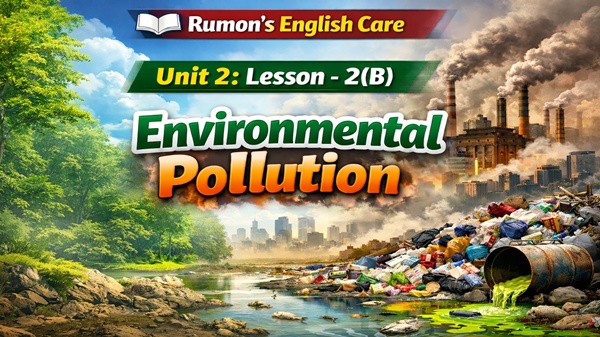
Bangladesh is now apparently in the grip of all sorts of pollution like air pollution, soil Pollution and water pollution. The dwellers of the urban areas are the worst suffers of such pollution. The indiscriminate industrialization process in Bangladesh over the past decades has created significant environmental problems. We will now read about some of the most common types of environmental pollution and ways of coping with them.
Air pollution: Air pollution comes from a wide variety of sources. In Bangladesh, poisonous exhaust from industrial plants, brick kilns, old or poorly-serviced vehicles and dust from roads and construction sites are some of the major sources of air pollution.
we can minimize this type of pollution by making less use of motor vehicles and avoiding the use of vehicles older than 20 years. We may also use proper lubricants to lessen the level of emissions and pollutants. We can encourage people to use Compressed Natural Gas (CNG) or Liquid Petroleum Gas (LPG) for fueling their cars. The government may relocate hazardous industries like brick kilns to areas away from human habitation.
Water pollution: Water pollution can occur in oceans, rivers, lakes, ponds and underground reservoirs. As different water sources flow together, the pollution can spread easily and quickly. Causes of water pollution include:
1. increased sediment from the soil, 2. erosion, 3. improper waste disposal and littering, 4. leakage of soil pollution into water supplies, 5. organic materials that decay in water supplies etc.
In fact, polluting the land means polluting the water. Throwing away a toxic substance on the ground near a water space means it eventually reaches a body of water. As a result, the water is polluted. Industrial wastes must not be disposed of in rivers or lakes. We need to be more careful about disposing of household wastes too. The use of pesticides means that when it rains on the lawn or garden, chemicals wash into the water bodies. Therefore, we must be aware of the dangers of using pesticides as they may pollute our rivers, canals and lakes.
Soil pollution: Among the most significant causes of soil pollution is the enormous volume of industrial waste which is being produced every day but not disposed of properly. The mismanagement of household wastes, particularly polythene shopping bags, has caused serious threats to the soil, and the drainage system. Another cause of soil pollution is the use of agricultural pesticides, fertilizers etc. Sometimes fuel leakages from automobiles may get washed away by rain and seep into the nearby soil.
Pesticides and fertilizers are useful for plant growth but their overuse has led to soil pollution. Natural fertilizers and compost can be used instead of their chemical alternatives. Recycling is another way to reduce and control soil pollution. Recycling papers, plastics and other materials reduce the volume of refuse in landfills. De- forestation also causes erosion, pollution and the loss of fertility in the topsoil. Planting trees and reforestation help prevent soil erosion and pollution.
নিচে পুরো অনুচ্ছেদটির বাংলা অর্থ (অনুবাদ) দেওয়া হলো—
বাংলাদেশ বর্তমানে বায়ু দূষণ, মাটি দূষণ ও পানি দূষণসহ নানা ধরনের দূষণের কবলে পড়েছে। শহরাঞ্চলের বাসিন্দারাই এসব দূষণের সবচেয়ে বেশি ভুক্তভোগী। গত কয়েক দশকে বাংলাদেশে নির্বিচার শিল্পায়নের ফলে গুরুতর পরিবেশগত সমস্যা সৃষ্টি হয়েছে। এখন আমরা পরিবেশ দূষণের কয়েকটি সাধারণ ধরন এবং সেগুলো মোকাবেলার উপায় সম্পর্কে পড়ব।
বায়ু দূষণ
বায়ু দূষণের উৎস অনেক রকম। বাংলাদেশে শিল্পকারখানা ও ইটভাটার বিষাক্ত ধোঁয়া, পুরোনো বা ঠিকমতো রক্ষণাবেক্ষণ না করা যানবাহনের ধোঁয়া এবং রাস্তা ও নির্মাণস্থল থেকে উড়ে আসা ধুলো—এসবই বায়ু দূষণের প্রধান উৎস।
এই ধরনের দূষণ কমাতে আমরা মোটরযানের ব্যবহার কমাতে পারি এবং ২০ বছরের বেশি পুরোনো যানবাহন ব্যবহার এড়িয়ে চলতে পারি। নির্গমন ও দূষকের মাত্রা কমানোর জন্য উপযুক্ত লুব্রিকেন্ট ব্যবহার করা যেতে পারে। মানুষকে গাড়ির জ্বালানি হিসেবে কমপ্রেসড ন্যাচারাল গ্যাস (CNG) বা লিকুইড পেট্রোলিয়াম গ্যাস (LPG) ব্যবহারে উৎসাহিত করা যেতে পারে। সরকার ইটভাটার মতো ঝুঁকিপূর্ণ শিল্পকারখানাগুলোকে জনবসতি থেকে দূরে স্থানান্তর করতে পারে।
পানি দূষণ
পানি দূষণ সমুদ্র, নদী, হ্রদ, পুকুর এবং ভূগর্ভস্থ জলাধারে ঘটতে পারে। বিভিন্ন জলস্রোত একত্রে প্রবাহিত হওয়ার ফলে দূষণ সহজে ও দ্রুত ছড়িয়ে পড়ে। পানি দূষণের কারণগুলোর মধ্যে রয়েছে—
১. মাটি থেকে অতিরিক্ত পলি জমা,
২. ভূমিক্ষয়,
৩. বর্জ্য সঠিকভাবে অপসারণ না করা ও আবর্জনা ফেলা,
৪. মাটির দূষণ পানি সরবরাহে মিশে যাওয়া,
৫. পানিতে পচে যাওয়া জৈব পদার্থ ইত্যাদি।
আসলে জমি দূষণ মানেই পানি দূষণ। পানির উৎসের কাছে জমিতে কোনো বিষাক্ত পদার্থ ফেলে দিলে তা শেষ পর্যন্ত পানির মধ্যে পৌঁছে যায় এবং পানি দূষিত হয়। শিল্পবর্জ্য কখনোই নদী বা হ্রদে ফেলা উচিত নয়। গৃহস্থালি বর্জ্য ফেলার ক্ষেত্রেও আমাদের আরও সতর্ক হতে হবে। কীটনাশক ব্যবহারের ফলে বৃষ্টির সময় বাগান বা মাঠ থেকে রাসায়নিক পদার্থ ধুয়ে জলাশয়ে চলে যায়। তাই কীটনাশক ব্যবহারের ক্ষতিকর দিক সম্পর্কে আমাদের সচেতন হতে হবে, কারণ এগুলো নদী, খাল ও হ্রদ দূষিত করতে পারে।
মাটি দূষণ
মাটি দূষণের অন্যতম প্রধান কারণ হলো প্রতিদিন উৎপন্ন বিপুল পরিমাণ শিল্পবর্জ্য, যা সঠিকভাবে অপসারণ করা হয় না। গৃহস্থালি বর্জ্যের অব্যবস্থাপনা, বিশেষ করে পলিথিনের শপিং ব্যাগ, মাটি ও ড্রেনেজ ব্যবস্থার জন্য মারাত্মক হুমকি সৃষ্টি করেছে। কৃষিতে ব্যবহৃত কীটনাশক ও সারও মাটি দূষণের আরেকটি কারণ। কখনো কখনো যানবাহন থেকে জ্বালানি লিক হয়ে বৃষ্টির পানির সঙ্গে ধুয়ে আশপাশের মাটিতে মিশে যায়।
কীটনাশক ও সার গাছের বৃদ্ধিতে উপকারী হলেও অতিরিক্ত ব্যবহারের ফলে মাটি দূষিত হচ্ছে। রাসায়নিক সারের পরিবর্তে প্রাকৃতিক সার ও কম্পোস্ট ব্যবহার করা যেতে পারে। পুনর্ব্যবহার (রিসাইক্লিং) মাটি দূষণ কমানোর আরেকটি কার্যকর উপায়। কাগজ, প্লাস্টিক ও অন্যান্য উপকরণ পুনর্ব্যবহার করলে ল্যান্ডফিলে জমা বর্জ্যের পরিমাণ কমে। বন উজাড়ও ভূমিক্ষয়, দূষণ এবং উপরের উর্বর মাটির ক্ষতির কারণ হয়। গাছ লাগানো ও পুনঃবনায়ন মাটি ক্ষয় ও দূষণ রোধে সাহায্য করে।
নিচে Environmental Pollution–সংক্রান্ত ১০০টি Vocabulary দেওয়া হলো। প্রতিটি শব্দের সঙ্গে আছে—
Part of Speech, বাংলা অর্থ, Synonym (সমার্থক শব্দ) ও Antonym (বিপরীত শব্দ)।
(SSC/HSC ও সাধারণ ইংরেজি শেখার জন্য উপযোগী)
1–20
-
Pollution (Noun) – দূষণ
Syn: contamination | Ant: cleanliness -
Environment (Noun) – পরিবেশ
Syn: surroundings | Ant: — -
Industrialization (Noun) – শিল্পায়ন
Syn: mechanization | Ant: deindustrialization -
Hazardous (Adj) – বিপজ্জনক
Syn: dangerous | Ant: safe -
Emission (Noun) – নির্গমন
Syn: discharge | Ant: absorption -
Exhaust (Noun) – নির্গত ধোঁয়া
Syn: fumes | Ant: intake -
Vehicle (Noun) – যানবাহন
Syn: transport | Ant: — -
Relocate (Verb) – স্থানান্তর করা
Syn: move | Ant: stay -
Minimize (Verb) – কমানো
Syn: reduce | Ant: maximize -
Encourage (Verb) – উৎসাহ দেওয়া
Syn: inspire | Ant: discourage -
Fuel (Noun) – জ্বালানি
Syn: energy source | Ant: — -
Natural (Adj) – প্রাকৃতিক
Syn: organic | Ant: artificial -
Toxic (Adj) – বিষাক্ত
Syn: poisonous | Ant: harmless -
Urban (Adj) – শহুরে
Syn: city-based | Ant: rural -
Sufferer (Noun) – ভুক্তভোগী
Syn: victim | Ant: beneficiary -
Construction (Noun) – নির্মাণকাজ
Syn: building | Ant: demolition -
Dust (Noun) – ধুলো
Syn: dirt | Ant: cleanliness -
Lubricant (Noun) – স্নেহক তেল
Syn: oil | Ant: — -
Government (Noun) – সরকার
Syn: authority | Ant: anarchy -
Habitation (Noun) – বসবাসযোগ্য এলাকা
Syn: settlement | Ant: wilderness
21–40
-
Water pollution (Noun) – পানি দূষণ
Syn: water contamination | Ant: clean water -
Reservoir (Noun) – জলাধার
Syn: storage | Ant: depletion -
Erosion (Noun) – ভূমিক্ষয়
Syn: wearing away | Ant: accumulation -
Sediment (Noun) – পলি
Syn: deposit | Ant: dissolution -
Disposal (Noun) – বর্জ্য অপসারণ
Syn: removal | Ant: storage -
Littering (Noun) – আবর্জনা ফেলা
Syn: dumping | Ant: cleaning -
Leakage (Noun) – চুইয়ে পড়া
Syn: seepage | Ant: sealing -
Decay (Verb) – পচা
Syn: rot | Ant: preserve -
Organic (Adj) – জৈব
Syn: natural | Ant: inorganic -
Chemical (Adj) – রাসায়নিক
Syn: synthetic | Ant: natural -
Pesticide (Noun) – কীটনাশক
Syn: insecticide | Ant: fertilizer -
Awareness (Noun) – সচেতনতা
Syn: consciousness | Ant: ignorance -
Danger (Noun) – বিপদ
Syn: risk | Ant: safety -
Canal (Noun) – খাল
Syn: channel | Ant: — -
River (Noun) – নদী
Syn: stream | Ant: — -
Lake (Noun) – হ্রদ
Syn: pond | Ant: — -
Dispose (Verb) – ফেলে দেওয়া
Syn: discard | Ant: keep -
Household (Adj) – গৃহস্থালি
Syn: domestic | Ant: industrial -
Waste (Noun) – বর্জ্য
Syn: garbage | Ant: resource -
Spread (Verb) – ছড়িয়ে পড়া
Syn: expand | Ant: contract
41–60
-
Soil pollution (Noun) – মাটি দূষণ
Syn: land contamination | Ant: fertile soil -
Fertilizer (Noun) – সার
Syn: manure | Ant: — -
Agricultural (Adj) – কৃষিজ
Syn: farming-related | Ant: industrial -
Drainage (Noun) – নিকাশী ব্যবস্থা
Syn: sewerage | Ant: blockage -
Threat (Noun) – হুমকি
Syn: danger | Ant: safety -
Enormous (Adj) – বিশাল
Syn: huge | Ant: tiny -
Mismanagement (Noun) – কু-ব্যবস্থাপনা
Syn: disorder | Ant: management -
Leak (Verb) – চুইয়ে পড়া
Syn: escape | Ant: contain -
Compost (Noun) – জৈব সার
Syn: organic manure | Ant: chemical fertilizer -
Recycle (Verb) – পুনর্ব্যবহার করা
Syn: reuse | Ant: discard -
Refuse (Noun) – আবর্জনা
Syn: waste | Ant: resource -
Landfill (Noun) – বর্জ্য ফেলার স্থান
Syn: dumping ground | Ant: recycling center -
Deforestation (Noun) – বন উজাড়
Syn: forest clearing | Ant: afforestation -
Ecosystem (Noun) – বাস্তুতন্ত্র
Syn: environment | Ant: — -
Fertility (Noun) – উর্বরতা
Syn: productivity | Ant: barrenness -
Topsoil (Noun) – উপরের উর্বর মাটি
Syn: surface soil | Ant: subsoil -
Prevent (Verb) – প্রতিরোধ করা
Syn: stop | Ant: allow -
Plantation (Noun) – বৃক্ষরোপণ
Syn: tree planting | Ant: deforestation -
Control (Verb) – নিয়ন্ত্রণ করা
Syn: manage | Ant: neglect -
Sustainable (Adj) – টেকসই
Syn: eco-friendly | Ant: harmful
61–100
-
Clean (Adj) – পরিষ্কার
Syn: pure | Ant: dirty -
Dirty (Adj) – নোংরা
Syn: filthy | Ant: clean -
Protect (Verb) – রক্ষা করা
Syn: safeguard | Ant: destroy -
Conservation (Noun) – সংরক্ষণ
Syn: protection | Ant: destruction -
Renewable (Adj) – নবায়নযোগ্য
Syn: reusable | Ant: non-renewable -
Climate (Noun) – জলবায়ু
Syn: weather pattern | Ant: — -
Global warming (Noun) – বৈশ্বিক উষ্ণতা বৃদ্ধি
Syn: climate change | Ant: cooling -
Emission-free (Adj) – নির্গমনমুক্ত
Syn: clean | Ant: polluting -
Sewage (Noun) – পয়ঃবর্জ্য
Syn: wastewater | Ant: clean water -
Sanitation (Noun) – স্বাস্থ্যসম্মত ব্যবস্থা
Syn: hygiene | Ant: filth -
Biodegradable (Adj) – জৈবভাবে পচনশীল
Syn: eco-friendly | Ant: non-biodegradable -
Non-toxic (Adj) – অবিষাক্ত
Syn: harmless | Ant: toxic -
Awful (Adj) – ভয়াবহ
Syn: terrible | Ant: pleasant -
Serious (Adj) – গুরুতর
Syn: severe | Ant: minor -
Responsible (Adj) – দায়িত্বশীল
Syn: accountable | Ant: careless -
Careless (Adj) – অসতর্ক
Syn: negligent | Ant: careful -
Dump (Verb) – ফেলে দেওয়া
Syn: discard | Ant: collect -
Awaken (Verb) – জাগ্রত করা
Syn: alert | Ant: ignore -
Suffer (Verb) – কষ্ট ভোগ করা
Syn: endure | Ant: enjoy -
Victim (Noun) – শিকার
Syn: sufferer | Ant: winner -
Disease (Noun) – রোগ
Syn: illness | Ant: health -
Health hazard (Noun) – স্বাস্থ্যঝুঁকি
Syn: danger | Ant: safety -
Contaminate (Verb) – দূষিত করা
Syn: pollute | Ant: purify -
Purify (Verb) – বিশুদ্ধ করা
Syn: clean | Ant: contaminate -
Awareness campaign (Noun) – সচেতনতামূলক অভিযান
Syn: public education | Ant: ignorance -
Legislation (Noun) – আইন প্রণয়ন
Syn: lawmaking | Ant: lawlessness -
Penalty (Noun) – শাস্তি
Syn: punishment | Ant: reward -
Enforce (Verb) – প্রয়োগ করা
Syn: implement | Ant: ignore -
Balance (Noun) – ভারসাম্য
Syn: harmony | Ant: imbalance -
Nature (Noun) – প্রকৃতি
Syn: environment | Ant: artificiality -
Greenery (Noun) – সবুজায়ন
Syn: vegetation | Ant: barrenness -
Afforestation (Noun) – বনায়ন
Syn: reforestation | Ant: deforestation -
Eco-friendly (Adj) – পরিবেশবান্ধব
Syn: green | Ant: harmful -
Preserve (Verb) – সংরক্ষণ করা
Syn: protect | Ant: destroy -
Destroy (Verb) – ধ্বংস করা
Syn: ruin | Ant: build -
Resource (Noun) – সম্পদ
Syn: asset | Ant: waste -
Scarcity (Noun) – ঘাটতি
Syn: shortage | Ant: abundance -
Abundance (Noun) – প্রাচুর্য
Syn: plenty | Ant: scarcity -
Responsibility (Noun) – দায়িত্ব
Syn: duty | Ant: irresponsibility -
Future generation (Noun) – ভবিষ্যৎ প্রজন্ম
Syn: coming generation | Ant: past generation
Part–A: Text-Based MCQ (1–40)
-
Bangladesh is suffering mainly from—
A. flood
B. pollution
C. drought
D. cyclone
Ans: B -
Who are the worst sufferers of pollution?
A. Rural people
B. Farmers
C. Urban dwellers
D. Fishermen
Ans: C -
Which process has created environmental problems?
A. Agriculture
B. Industrialization
C. Education
D. Globalization
Ans: B -
One major source of air pollution is—
A. Rain
B. Trees
C. Brick kilns
D. Rivers
Ans: C -
Old vehicles cause—
A. water pollution
B. noise pollution
C. air pollution
D. soil pollution
Ans: C -
Air pollution can be reduced by—
A. using old vehicles
B. cutting trees
C. using CNG
D. throwing waste
Ans: C -
CNG stands for—
A. Common Natural Gas
B. Compressed Natural Gas
C. Clean Natural Gas
D. Central Natural Gas
Ans: B -
Hazardous industries should be relocated—
A. near schools
B. near rivers
C. away from habitation
D. in cities
Ans: C -
Water pollution occurs in—
A. rivers only
B. oceans only
C. ponds only
D. all water bodies
Ans: D -
Water pollution spreads quickly because—
A. water evaporates
B. water sources flow together
C. water is deep
D. rain stops
Ans: B -
Increased sediment comes from—
A. air
B. soil
C. gas
D. smoke
Ans: B -
Erosion means—
A. planting trees
B. wearing away of soil
C. rainfall
D. irrigation
Ans: B -
Throwing toxic substances on land eventually pollutes—
A. air
B. forest
C. water
D. sky
Ans: C -
Industrial waste should not be disposed of in—
A. bins
B. rivers
C. factories
D. yards
Ans: B -
Household waste disposal should be—
A. careless
B. regular
C. careful
D. random
Ans: C -
Pesticides mainly pollute—
A. air
B. soil only
C. water bodies
D. noise
Ans: C -
Soil pollution is caused by—
A. rainfall
B. industrial waste
C. sunlight
D. wind
Ans: B -
Polythene bags damage—
A. soil and drainage
B. rivers only
C. air only
D. crops only
Ans: A -
Fuel leakage affects—
A. air
B. soil
C. sky
D. plants
Ans: B -
Overuse of fertilizers leads to—
A. soil fertility
B. soil pollution
C. clean land
D. greenery
Ans: B -
Compost is a type of—
A. chemical fertilizer
B. fuel
C. natural fertilizer
D. pesticide
Ans: C -
Recycling helps to reduce—
A. rainfall
B. pollution
C. temperature
D. population
Ans: B -
Recycling reduces waste in—
A. oceans
B. rivers
C. landfills
D. air
Ans: C -
Deforestation causes—
A. rainfall
B. erosion
C. soil fertility
D. greenery
Ans: B -
Planting trees helps prevent—
A. pollution
B. erosion
C. deforestation
D. all
Ans: D -
Air pollution comes from—
A. vehicles
B. factories
C. brick kilns
D. all
Ans: D -
Urban areas suffer more because of—
A. greenery
B. industries
C. rivers
D. forests
Ans: B -
Water pollution affects—
A. health
B. environment
C. life
D. all
Ans: D -
Pollution is mainly a result of—
A. awareness
B. negligence
C. care
D. education
Ans: B -
Proper waste management can—
A. increase pollution
B. reduce pollution
C. destroy soil
D. harm health
Ans: B -
Brick kilns mainly cause—
A. water pollution
B. air pollution
C. soil pollution
D. noise pollution
Ans: B -
Old vehicles should be—
A. repaired
B. avoided
C. encouraged
D. exported
Ans: B -
Industrialization should be—
A. stopped
B. controlled
C. encouraged blindly
D. ignored
Ans: B -
Pollution mainly threatens—
A. buildings
B. roads
C. human life
D. machines
Ans: C -
Fertilizers are useful for—
A. pollution
B. plant growth
C. erosion
D. waste
Ans: B -
Excess use of pesticides is—
A. beneficial
B. harmless
C. dangerous
D. necessary
Ans: C -
Soil pollution reduces—
A. fertility
B. pollution
C. greenery
D. rainfall
Ans: A -
Natural fertilizers are—
A. harmful
B. eco-friendly
C. toxic
D. useless
Ans: B -
Reforestation means—
A. cutting trees
B. planting trees
C. pollution
D. erosion
Ans: B -
Environmental pollution is a—
A. local issue
B. national issue
C. global issue
D. minor issue
Ans: C
Part–B: Synonyms (41–60)
-
Synonym of pollution—
A. cleanliness
B. contamination
C. purity
D. hygiene
Ans: B -
Synonym of hazardous—
A. safe
B. risky
C. harmless
D. clean
Ans: B -
Synonym of encourage—
A. stop
B. inspire
C. ignore
D. blame
Ans: B -
Synonym of dispose—
A. keep
B. discard
C. collect
D. save
Ans: B -
Synonym of toxic—
A. harmless
B. poisonous
C. useful
D. clean
Ans: B -
Synonym of urban—
A. rural
B. village
C. city-based
D. forest
Ans: C -
Synonym of erosion—
A. growth
B. wearing away
C. planting
D. fertilizing
Ans: B -
Synonym of waste—
A. resource
B. garbage
C. treasure
D. asset
Ans: B -
Synonym of recycle—
A. destroy
B. reuse
C. throw
D. waste
Ans: B -
Synonym of prevent—
A. allow
B. stop
C. increase
D. spread
Ans: B -
Synonym of fertility—
A. barrenness
B. productivity
C. dryness
D. damage
Ans: B -
Synonym of threat—
A. safety
B. risk
C. peace
D. help
Ans: B -
Synonym of decay—
A. grow
B. rot
C. build
D. clean
Ans: B -
Synonym of deforestation—
A. afforestation
B. forest clearing
C. greenery
D. plantation
Ans: B -
Synonym of victim—
A. winner
B. sufferer
C. leader
D. hero
Ans: B -
Synonym of awareness—
A. ignorance
B. consciousness
C. carelessness
D. neglect
Ans: B -
Synonym of danger—
A. risk
B. safety
C. benefit
D. help
Ans: A -
Synonym of mismanagement—
A. control
B. disorder
C. planning
D. care
Ans: B -
Synonym of preserve—
A. destroy
B. protect
C. waste
D. spoil
Ans: B -
Synonym of enormous—
A. tiny
B. huge
C. small
D. little
Ans: B
Part–C: Antonyms (61–80)
-
Antonym of clean—
A. pure
B. dirty
C. neat
D. clear
Ans: B -
Antonym of toxic—
A. harmful
B. poisonous
C. harmless
D. deadly
Ans: C -
Antonym of urban—
A. city
B. industrial
C. rural
D. town
Ans: C -
Antonym of encourage—
A. inspire
B. motivate
C. discourage
D. support
Ans: C -
Antonym of fertile—
A. productive
B. barren
C. rich
D. green
Ans: B -
Antonym of hazardous—
A. risky
B. safe
C. dangerous
D. toxic
Ans: B -
Antonym of recycle—
A. reuse
B. reduce
C. discard
D. protect
Ans: C -
Antonym of erosion—
A. wearing away
B. accumulation
C. destruction
D. decay
Ans: B -
Antonym of pollute—
A. contaminate
B. purify
C. destroy
D. spoil
Ans: B -
Antonym of prevent—
A. stop
B. block
C. allow
D. reduce
Ans: C -
Antonym of deforestation—
A. erosion
B. afforestation
C. pollution
D. destruction
Ans: B -
Antonym of careless—
A. negligent
B. careful
C. unaware
D. reckless
Ans: B -
Antonym of dirty—
A. polluted
B. clean
C. harmful
D. dusty
Ans: B -
Antonym of danger—
A. risk
B. threat
C. safety
D. harm
Ans: C -
Antonym of destroy—
A. damage
B. ruin
C. build
D. break
Ans: C -
Antonym of waste—
A. garbage
B. refuse
C. resource
D. trash
Ans: C -
Antonym of toxic—
A. safe
B. deadly
C. harmful
D. poisonous
Ans: A -
Antonym of urbanization—
A. modernization
B. industrialization
C. ruralization
D. mechanization
Ans: C -
Antonym of serious—
A. severe
B. major
C. minor
D. critical
Ans: C -
Antonym of spread—
A. expand
B. scatter
C. contract
D. increase
Ans: C
Part–D: Parts of Speech (81–100)
-
Pollution is a—
A. Verb
B. Noun
C. Adjective
D. Adverb
Ans: B -
Hazardous is a—
A. Noun
B. Verb
C. Adjective
D. Adverb
Ans: C -
Encourage is a—
A. Noun
B. Verb
C. Adjective
D. Preposition
Ans: B -
Industrialization is a—
A. Verb
B. Adjective
C. Noun
D. Adverb
Ans: C -
Dispose is a—
A. Noun
B. Verb
C. Adjective
D. Conjunction
Ans: B -
Urban is a—
A. Verb
B. Noun
C. Adjective
D. Adverb
Ans: C -
Recycle is a—
A. Noun
B. Verb
C. Adjective
D. Pronoun
Ans: B -
Erosion is a—
A. Verb
B. Noun
C. Adjective
D. Adverb
Ans: B -
Carefully is a—
A. Noun
B. Verb
C. Adjective
D. Adverb
Ans: D -
Toxic is a—
A. Noun
B. Verb
C. Adjective
D. Adverb
Ans: C -
Awareness is a—
A. Noun
B. Verb
C. Adjective
D. Adverb
Ans: A -
Prevent is a—
A. Noun
B. Verb
C. Adjective
D. Adverb
Ans: B -
Fertility is a—
A. Verb
B. Noun
C. Adjective
D. Adverb
Ans: B -
Planting (in tree planting) is a—
A. Noun
B. Verb
C. Adjective
D. Preposition
Ans: A -
Serious is a—
A. Noun
B. Verb
C. Adjective
D. Adverb
Ans: C -
Dispose of is a—
A. Phrase verb
B. Noun phrase
C. Adjective phrase
D. Idiom
Ans: A -
Reforestation is a—
A. Verb
B. Noun
C. Adjective
D. Adverb
Ans: B -
Harmful is a—
A. Noun
B. Verb
C. Adjective
D. Adverb
Ans: C -
Reduce is a—
A. Noun
B. Verb
C. Adjective
D. Adverb
Ans: B -
Cleanliness is a—
A. Verb
B. Noun
C. Adjective
D. Adverb
Ans: B
2. Answer the following questions.
1. What is environmental pollution? Describe the types of pollution affecting Bangladesh.
Answer:
Environmental pollution means the contamination of air, water and soil by harmful substances. Bangladesh is mainly affected by three types of pollution: air pollution, water pollution and soil pollution. Air pollution is caused by industrial smoke, brick kilns and old vehicles. Water pollution occurs due to industrial waste, pesticides and improper waste disposal. Soil pollution is caused by industrial waste, polythene bags, excessive use of fertilizers and pesticides.
2. Why are urban people the worst sufferers of pollution in Bangladesh?
Answer:
Urban people are the worst sufferers of pollution because most industries, vehicles, brick kilns and construction works are concentrated in cities. Urban areas have heavy traffic, old vehicles and factories which produce smoke and toxic gases. As a result, city dwellers suffer from various diseases caused by air, water and soil pollution.
3. Describe the causes and effects of air pollution in Bangladesh.
Answer:
Air pollution in Bangladesh is caused by poisonous smoke from industries, brick kilns, old and poorly serviced vehicles, and dust from roads and construction sites. The effects of air pollution are serious. It causes breathing problems, asthma, lung diseases and environmental imbalance. It also reduces visibility and damages plants and buildings.
4. How can air pollution be reduced in Bangladesh?
Answer:
Air pollution can be reduced by minimizing the use of motor vehicles and avoiding vehicles older than 20 years. Using proper lubricants can reduce harmful emissions. People should be encouraged to use CNG or LPG instead of petrol or diesel. The government should relocate hazardous industries like brick kilns away from residential areas and enforce environmental laws strictly.
5. Explain how water pollution occurs and why it is dangerous.
Answer:
Water pollution occurs when harmful substances such as industrial waste, household garbage, pesticides and soil sediments mix with water bodies like rivers, lakes and ponds. Since water sources flow together, pollution spreads quickly. Water pollution is dangerous because it causes waterborne diseases, harms aquatic life and makes water unsafe for drinking and daily use.
6. “Polluting the land means polluting the water.” Explain.
Answer:
Polluting the land means polluting the water because toxic substances thrown on land eventually reach nearby water bodies through rain or underground flow. For example, pesticides used on land are washed into rivers and canals by rainwater. As a result, the water becomes polluted. Thus, land pollution directly contributes to water pollution.
7. What are the causes and effects of soil pollution?
Answer:
Soil pollution is caused by industrial waste, improper disposal of household waste, polythene bags, fuel leakage from vehicles and excessive use of chemical fertilizers and pesticides. Soil pollution reduces soil fertility, affects crop production, damages the drainage system and creates health hazards for humans and animals.
8. How can soil pollution be controlled?
Answer:
Soil pollution can be controlled by proper disposal of industrial and household waste. The use of chemical fertilizers and pesticides should be reduced, and natural fertilizers and compost should be used instead. Recycling materials like paper and plastic can reduce waste. Planting trees and reforestation help prevent soil erosion and pollution.
9. What role does recycling play in reducing environmental pollution?
Answer:
Recycling plays an important role in reducing environmental pollution. Recycling paper, plastic and other materials reduces the amount of waste dumped in landfills. It helps control soil pollution, saves natural resources and reduces the need for new raw materials. Thus, recycling contributes to a cleaner and healthier environment.
10. Why is public awareness important to control environmental pollution?
Answer:
Public awareness is essential to control environmental pollution because people are directly responsible for many polluting activities. If people become aware of the harmful effects of pollution, they will reduce waste, avoid using harmful substances and follow environmentally friendly practices. Awareness helps ensure proper waste disposal and encourages the protection of nature for future generations.
3. Fill in the blanks.
1. Air Pollution
Air pollution is a major problem in Bangladesh. It is caused by (a) ———–, brick kilns, old vehicles, and dust from roads. People living in (b) ———- areas are the worst affected. To reduce air pollution, we should use CNG or LPG instead of (c) ———- and avoid vehicles older than (d) ———–. The government should relocate (e) ——— industries away from residential areas.
Answer Key:
a. industrial smoke
b. urban
c. petrol/diesel
d. 20 years
e. hazardous
2. Water Pollution
Water pollution occurs when rivers, lakes, and ponds are contaminated by (a) ————, industrial waste, and household garbage. Increased (b) ———- from soil and erosion also pollute water. Pesticides used on gardens wash into water bodies when it (c) ——-. Polluted water causes (d) ———- and harms aquatic life. Therefore, people should be careful about (e) ———– household and industrial waste.
Answer Key:
a. toxic substances
b. sediment
c. rains
d. diseases
e. disposing
3. Soil Pollution
Soil pollution is caused by industrial waste, polythene bags, and the overuse of (a) ———–. Fuel leakages from vehicles can seep into nearby (b) ——–. Soil pollution reduces (c) ——— and damages the drainage system. To prevent it, we should use (d) ——– fertilizers and practice recycling of paper and plastic. Planting trees and (e) ——— help prevent soil erosion.
Answer Key:
a. fertilizers/pesticides
b. soil
c. fertility
d. natural
e. reforestation
4. Causes of Environmental Pollution
Bangladesh faces environmental problems due to rapid (a) ——— over the past decades. Urban dwellers suffer more from (b) ——–, water pollution, and soil pollution. Industries, brick kilns, and old vehicles produce (c) ——- gases that harm the environment. Improper disposal of household waste and (d) ——– also pollute water and soil. Public (e) ———– is necessary to reduce these problems.
Answer Key:
a. industrialization
b. air pollution
c. poisonous
d. polythene
e. awareness
5. Solutions to Pollution
Pollution can be reduced by minimizing vehicle use, using clean fuel, and relocating (a) industries. Water pollution can be reduced by avoiding (b) disposal into rivers and lakes. Soil pollution can be controlled by using natural fertilizers and practicing (c). Planting trees and (d) help prevent erosion. Protecting the environment ensures a safe and healthy (e) for future generations.
Answer Key:
a. hazardous
b. toxic waste
c. recycling
d. reforestation
e. life