
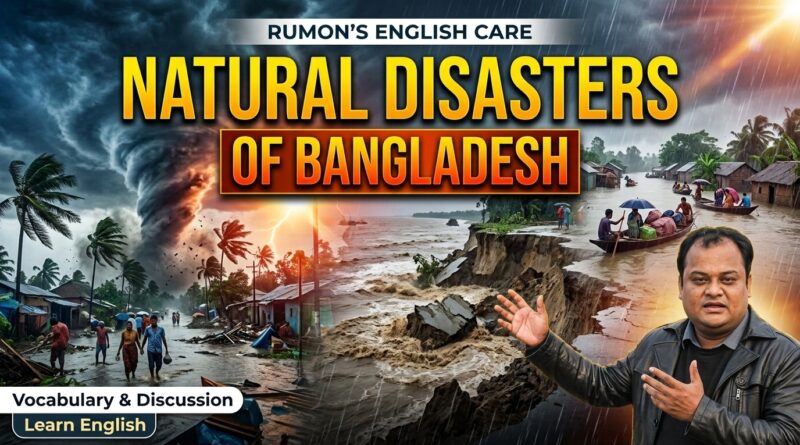
Natural Disasters of Bangladesh
Natural Disasters of Bangladesh [600 Words]
Scroll to find another of 500 words & 450 Words]
Bangladesh is a beautiful country with a large population and fertile land. However, it is also one of the countries most vulnerable to natural disasters because of its geographical location, low-lying land, rivers, and tropical climate. Every year, different kinds of natural disasters occur in Bangladesh and cause enormous loss of life, property, crops, livestock, and infrastructure. Floods, cyclones, tidal surges, river erosion, droughts, landslides, and earthquakes are the major natural disasters in our country.
Flood is the most common natural disaster in Bangladesh. The country has many rivers, including the Padma, Jamuna, and Meghna. During the rainy season, heavy rainfall and water from upstream areas can cause rivers to overflow. As a result, large areas of the country become flooded. Houses, roads, schools, crops, and markets may go under water. People often have to leave their homes and take shelter in schools, shelters, or other safe places. Floods can also cause shortages of food and drinking water and increase the risk of waterborne diseases. However, floods also bring fertile silt to agricultural land and can have some beneficial effects on soil fertility.
Cyclones are another serious natural disaster in Bangladesh, particularly in coastal areas. Strong winds, heavy rain, and tidal surges associated with cyclones can cause widespread destruction. Coastal villages may be inundated, houses may be damaged, trees may be uprooted, and crops and livestock may be lost. Poor people living in vulnerable coastal areas often suffer greatly. The construction of cyclone shelters, improved warning systems, and timely evacuation have helped reduce deaths during many cyclones.
River erosion is a major problem in areas beside large rivers. Rivers continuously change their courses and wash away their banks. Many families lose their houses, farmland, and other property because of erosion. Some people become homeless and are forced to move to new places. River erosion also causes economic hardship and disrupts the lives of affected communities.
Drought is another natural disaster, especially in the northern and northwestern parts of Bangladesh. During a long period without sufficient rainfall, water becomes scarce and agricultural production decreases. Farmers may face difficulties in growing crops, and livestock may also suffer from a lack of water and food. Proper irrigation, water conservation, and drought-resistant crops can help reduce the effects of drought.
Landslides occur mainly in the hilly regions of Bangladesh, especially during periods of heavy rainfall. Excessive rain can make hill slopes unstable, leading to the collapse of soil and rocks. Landslides may damage houses, roads, and other structures and can cause deaths. Careful hill management, proper drainage, and avoiding unsafe settlement in vulnerable areas can reduce the risk.
Earthquakes are also a potential threat to Bangladesh. Although they do not occur as frequently as floods or cyclones, a strong earthquake can cause serious damage, particularly in densely populated urban areas. Weak buildings and unplanned construction can increase the danger. Therefore, buildings should follow safety standards, and people should learn basic earthquake safety measures.
Natural disasters cannot always be prevented, but their harmful effects can be reduced. The government and people should work together to improve disaster preparedness. Early warning systems, cyclone shelters, embankments, rescue services, emergency food supplies, and public awareness programmes are very important. Planting trees, protecting wetlands, improving drainage systems, and following proper building regulations can also help.
In conclusion, natural disasters are a recurring challenge for Bangladesh. They cause suffering and economic losses, but proper planning, public awareness, scientific knowledge, and coordinated disaster management can greatly reduce their impacts. We should remain prepared and help vulnerable people before, during, and after disasters. With effective measures and united efforts, Bangladesh can become more resilient to natural disasters.
[or, 500 Words]
Bangladesh is a beautiful country with fertile soil, numerous rivers, and a tropical climate. However, its geographical location makes it highly vulnerable to natural disasters. Every year, different parts of Bangladesh are affected by floods, cyclones, tidal surges, river erosion, droughts, landslides, and sometimes earthquakes. These disasters cause great loss of life and property and create serious problems for the people.
Flood is the most common natural disaster in Bangladesh. The country has many rivers, including the Padma, Jamuna, and Meghna. During the rainy season, heavy rainfall and water from upstream areas often cause rivers to overflow. As a result, large areas of the country go under water. Houses, roads, schools, crops, and markets are damaged. People often have to leave their homes and take shelter in safer places. Floods also cause shortages of food and drinking water and increase the risk of diseases. However, floods also bring fertile silt that can improve the fertility of agricultural land.
Cyclones are another major natural disaster, especially in the coastal areas of Bangladesh. A cyclone is usually accompanied by strong winds, heavy rain, and tidal surges. It can destroy houses, uproot trees, damage roads, and wash away crops and livestock. Coastal people suffer greatly during severe cyclones. Many people lose their homes and sources of income. Cyclone shelters, early warning systems, and timely evacuation have helped reduce the loss of lives.
River erosion is a serious problem for people living beside major rivers. Rivers continuously change their courses and gradually wash away their banks. As a result, many families lose their homes, farmland, and property. Some people become homeless and are forced to move to other areas. River erosion creates long-term economic and social difficulties for affected families.
Drought is another natural disaster, particularly in the northern and northwestern parts of Bangladesh. When there is insufficient rainfall for a long period, agricultural production decreases. Farmers face difficulties in cultivating crops, while people and animals may suffer from water shortages. Proper irrigation, water conservation, and drought-resistant crops can help reduce the effects of drought.
Landslides mainly occur in the hilly areas of Bangladesh during heavy rainfall. Excessive rain can make hills unstable and cause soil and rocks to slide down. Landslides may destroy houses, roads, and other structures and can cause deaths. Proper drainage, careful hill management, and avoiding unsafe settlement in vulnerable areas can reduce the risk.
Earthquakes are also a potential threat to Bangladesh. Although they are less frequent than floods and cyclones, a powerful earthquake can cause serious damage, especially in densely populated cities. Strong building construction, proper urban planning, and public awareness are important for reducing earthquake risks.
Natural disasters cannot always be prevented, but their harmful effects can be reduced through proper preparation. The government should improve early warning systems, cyclone shelters, rescue services, embankments, and emergency relief programmes. People should also receive training about disaster preparedness and safety. Planting trees, protecting wetlands, improving drainage systems, and following proper building rules can also help.
In conclusion, natural disasters are a major challenge for Bangladesh. They cause suffering, displacement, and economic loss. However, proper planning, public awareness, scientific knowledge, and united efforts can reduce their harmful effects. If the government and people work together, Bangladesh can become stronger and more resilient in facing natural disasters.
[ or 450 Words]
Bangladesh is a land of rivers, fertile plains, and a tropical climate. Its geographical position and low-lying land make it vulnerable to various natural disasters. Every year, people in different parts of the country face floods, cyclones, tidal surges, river erosion, droughts, landslides, and earthquakes. These disasters cause enormous damage to human lives, houses, crops, roads, animals, and other property. They also create serious social and economic problems.
Flood is the most common natural disaster in Bangladesh. During the rainy season, heavy rainfall and excessive water from upstream rivers often cause floods. The Padma, Jamuna, and Meghna may overflow and submerge large areas. Houses, roads, schools, fields, and markets go under water. Many people become homeless and take shelter in schools, cyclone centres, or other safe places. Floods can also cause food shortages, water pollution, and various diseases. However, normal floods can bring fertile silt to agricultural land and increase soil fertility.
Cyclones are another devastating disaster in Bangladesh, especially in coastal areas. They are often accompanied by strong winds, heavy rainfall, and tidal surges. A severe cyclone can destroy houses, uproot trees, damage crops, and kill livestock. People living in coastal villages are particularly vulnerable. In recent years, early warning systems, cyclone shelters, and better evacuation programmes have helped people prepare for cyclones and reduce casualties.
River erosion is a regular problem in many parts of Bangladesh. The banks of large rivers are continuously washed away by strong currents. As a result, people lose their houses, farmland, schools, and other property. Many families become homeless and have to move from one place to another. River erosion causes both financial loss and emotional suffering.
Drought is another important natural disaster. It mainly affects areas where rainfall is insufficient for a long period. During drought, farmers face difficulties in growing crops because of a shortage of water. The production of rice and other crops may decrease. Proper irrigation, water conservation, and the use of suitable crops can help farmers deal with drought.
Landslides mainly occur in the hilly regions of Bangladesh, especially during heavy rainfall. Excessive rain can loosen the soil and cause large amounts of earth to move down the slopes. Landslides may damage houses, roads, and other structures. Careful settlement planning, proper drainage, and protection of hills can reduce this danger.
Earthquakes are less frequent but potentially dangerous. A strong earthquake can cause serious damage to buildings and infrastructure, particularly in crowded cities. Strong construction and public awareness are necessary to reduce the risks.
Natural disasters cannot be completely stopped, but their effects can be reduced. The government should strengthen warning systems, rescue services, shelters, embankments, and relief programmes. People should also learn disaster-preparedness measures and cooperate during emergencies.
In conclusion, natural disasters are a serious challenge for Bangladesh. They cause suffering and economic losses every year. With proper planning, awareness, modern technology, environmental protection, and collective efforts, we can reduce the harmful effects of disasters and build a safer and more resilient Bangladesh.